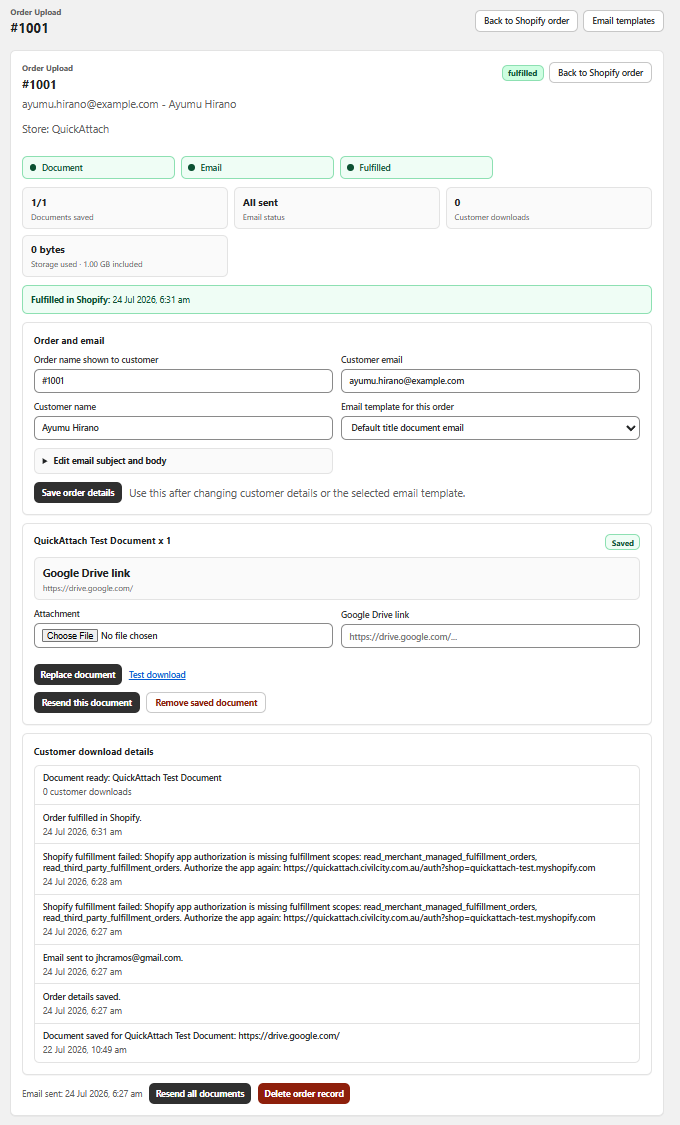
To prevent sending the wrong PDF to a Shopify customer, move the file delivery step out of loose email threads and into an order-specific workflow. The finished PDF should be matched to the Shopify order and, when the order contains multiple custom products, to the correct line item.
This matters for any store selling personalized reports, certificates, readings, audits, proofs, or private documents. The product may be the same, but the deliverable is different for each buyer. A small mix-up can expose private information, create support work, and force your team to rebuild trust with the customer.
Why wrong-file mistakes happen.
Most wrong-PDF errors do not come from careless teams. They come from workflows where the order, file, email, and fulfillment status live in separate places.
- The Shopify order is in one tab, the finished PDF is in a folder, and the customer email is in another app.
- Filenames look similar, especially when several customers buy the same product on the same day.
- A team member forwards a draft, revised file, or old attachment because the current version is not obvious.
- Support cannot see the delivery record on the Shopify order, so they have to search inboxes before answering the customer.
Manual checks help, but they do not change the shape of the problem. If the file is not tied to the order, your team has to rebuild that match every time they send or resend it.
Use the order as the source of truth.
The Shopify order already knows the customer, order number, purchased products, payment status, and fulfillment state. For custom PDFs, it should also show which finished file belongs to that order.
A cleaner workflow looks like this:
- Receive the order. Keep the order unfulfilled while the custom PDF is being prepared.
- Create the customer-specific PDF. Use a filename that includes the order number or customer reference.
- Attach the PDF to the order item. Match the file to the line item it belongs to, not just to a folder or email draft.
- Check the attachment before delivery. Confirm the customer name, order number, and product details in one place.
- Send the branded download email. Deliver the PDF when fulfillment is ready and keep the download path connected to the order.
This turns wrong-file prevention into a workflow design problem. The person sending the PDF no longer has to remember which attachment belongs to which customer. The order carries that context.
Build checks for multi-file orders.
Wrong-file risk increases when one Shopify order contains several personalized deliverables. A customer might buy a report for themselves, a second report as a gift, and an add-on document that will be ready later.
In that case, a single order-level note is not enough. Each deliverable needs its own status. Your team should be able to see which line item has a finished PDF, which one is still being prepared, and which download email has already gone out.
For that workflow, read how to manage several custom files in one Shopify order. If the file is still being created after payment, the broader process is covered in how to deliver a file that is created after checkout.
Example: personalized PDF reports.
Picture a store that sells personalized property, wellness, or compatibility reports. Three customers buy the same report product in one afternoon. The PDFs all have similar names and live in the same working folder.
If the team sends files from an inbox, they have to copy the customer email, find the right attachment, write the delivery message, and remember to mark the Shopify order as complete. That gives mistakes several chances to enter the process.
With an order-specific workflow, the team opens the Shopify order, attaches the finished PDF to the matching item, checks the customer and file name together, then sends the branded download email. Later, support can open the same order and see what was delivered. For the support side of that process, read how to track which file was sent to a Shopify customer.
Where QuickAttach fits.
QuickAttach is being developed for merchants who create the deliverable after checkout. The app is designed to let a merchant attach a unique file or secure link to the right order item, send a branded customer download email when the file is ready, and keep the delivery context connected to the order.
If you are setting up this kind of process from scratch, start with how to send a unique PDF to each Shopify customer. For app selection, see what to look for in a Shopify custom file delivery app. For the support and audit trail, read how to keep a delivery record on the Shopify order. You can also see the product flow on How QuickAttach works.
Reduce wrong-file risk before orders scale.
Sending customer-specific PDFs through Shopify? Install QuickAttach for an order-specific delivery workflow built around the right file, customer, and order item.
Install QuickAttach on Shopify