A Shopify app for personalized digital downloads needs to solve a specific operational problem: the deliverable is created or selected for one customer after checkout. A standard product download can send the same file to every buyer, but it cannot by itself represent a report prepared from that buyer's details.
Before choosing an app, map the real workflow. What does the merchant create after payment? Where is the file matched to the order? How does the customer receive it? And can support find the delivery record later?
Start with the difference between product and order.
Product-level delivery is useful when the file belongs to the product: for example, every buyer downloads the same guide, template, or instruction PDF. Personalized delivery is different. The file belongs to a particular order or line item because it contains that customer's information or result.
That distinction matters for astrology reports, tarot readings, certificates, audits, custom proofs, title documents, care plans, and made-to-order PDFs. The product is what the customer buys. The order is where the completed deliverable belongs.
What the app should handle.
Look for a workflow that follows the work your team actually performs after checkout:
- Order matching: the merchant can identify the right Shopify order and, when needed, the right line item before attaching the file.
- File or link delivery: the workflow supports an uploaded file or a private external link when the deliverable lives elsewhere.
- Clear fulfillment timing: the customer is told that the personalized file is being prepared, then receives it when it is ready.
- Customer access: the customer has a clear download path instead of relying on an old email attachment.
- Operational context: the merchant and support team can see what was attached and delivered from the order workflow.
Questions to ask before choosing.
Ask whether the app is designed for a different file per customer or mainly for distributing one product asset. Ask how a merchant corrects a mistaken attachment, handles several files in one order, and manages a deliverable that is not ready immediately. These questions expose whether the app fits custom fulfillment or merely adds a download button to a product.
Also check the customer experience. A useful delivery message should identify what is ready, explain what the customer should do next, and use the store's own brand context. Customers should not have to guess whether a generic download link is meant for them.
How QuickAttach fits.
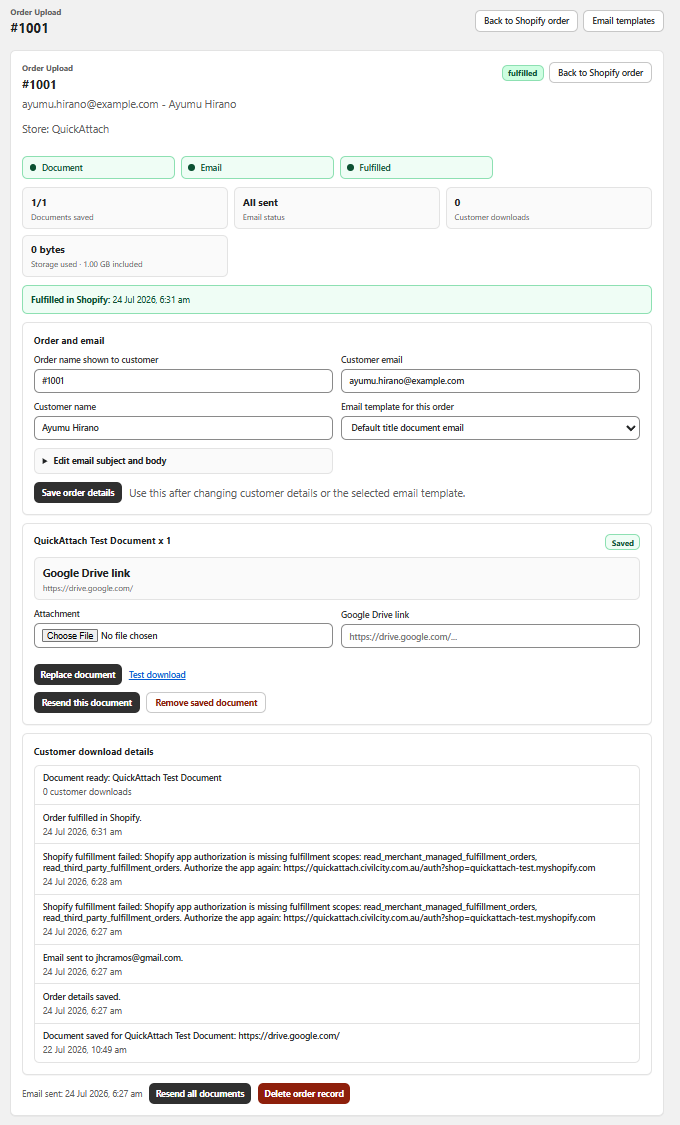
QuickAttach is being built around order-specific file delivery. The planned workflow lets a merchant attach a file or secure link to the relevant Shopify order item, deliver it through a branded email when fulfillment is ready, and keep a customer download path associated with the order.
That makes it suitable for stores where the file is produced after checkout and every customer may receive a different result. It does not replace the work of creating the report, certificate, proof, or document; it keeps the finished deliverable connected to the order that requested it.
For the broader decision, read what to look for in a Shopify custom file delivery app. If you are comparing product downloads with order-specific delivery, see the Shopify Digital Downloads alternative for custom orders. For the end-to-end process, start with how to deliver personalized digital products after purchase.
Need a different file for every customer?
QuickAttach is being developed for merchants who create personalized deliverables after checkout and need an order-linked delivery workflow.
Install QuickAttach on Shopify