Recurring orders create a subtle file-delivery problem. The customer may buy the same product each month, quarter, or year, but the document made for each period is different. A product-level digital download can identify the product; it cannot reliably identify which renewal's report or certificate is ready.
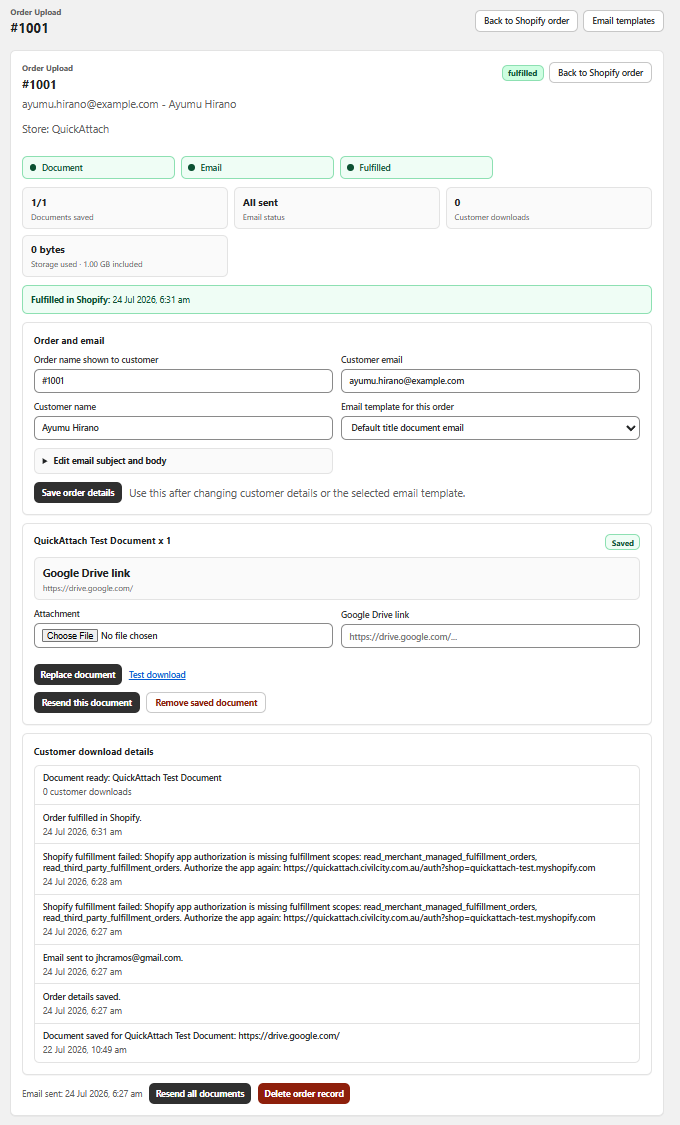
The practical answer is to treat each renewal as a separate delivery event: find the new Shopify order, prepare the new file, attach it to that order or line item, and send the customer a clear delivery message.
Why recurring custom files get mixed up.
A manual workflow often starts with an email notification and a folder named for the customer. That seems workable until the same customer has several active orders. Files named “report-final.pdf” or “certificate.pdf” make the problem worse: the team can attach the latest file to the wrong order, or the customer can download an earlier document and assume it is current.
- The same customer appears in multiple paid orders.
- Each order has a different preparation or fulfillment date.
- The file name does not explain which period it covers.
- Support cannot tell quickly which version was delivered.
Use an order-by-order renewal checklist.
- Identify the new order. Confirm the order number, customer, line item, and period covered before preparing the deliverable.
- Prepare and name the file clearly. Include a useful period or document label, while avoiding unnecessary personal information in the filename.
- Match before sending. Check the customer details and order context again, then attach the file to the relevant order item.
- Deliver when ready. If preparation is not complete, leave the file pending instead of sending an earlier version as a substitute.
- Keep the customer path clear. The email and download page should make it obvious which renewal and document the customer is opening.
Worked example: a quarterly property report.
Imagine a store selling a quarterly property monitoring service. Jordan's January order produces a January report. The April renewal produces a different report, even though both orders contain the same product.
The team should open the April order, verify Jordan's details, attach the April report to that order, and deliver it with the order context visible. Jordan can then distinguish the April report from the January report. If support receives a question later, the order—not a shared folder search—is the starting point.
Why a generic digital download app is not enough.
Product-level download apps fit a product where every buyer receives the same asset, such as a template or guide. A renewal with a newly created report is different: the product repeats, but the deliverable changes for each order. Manual email attachments can send the file, but they separate the customer-facing delivery from the Shopify order and make version control dependent on filenames and inbox discipline.
QuickAttach is being built for this order-specific workflow. A merchant can attach a different file or secure link to the relevant Shopify order item, send a branded download email when fulfillment is ready, and keep the delivery path associated with that order.
For the underlying setup, read how to deliver personalized digital products after purchase on Shopify. For version changes, see how to handle revised custom files. If customers need access to an earlier deliverable, read how customers can re-download personalized Shopify files.
Keep every renewal's file with its order.
Creating a new customer-specific document for every Shopify renewal? Install QuickAttach for an order-specific delivery workflow.
Install on Shopify