Some Shopify merchants do not deliver a downloadable PDF directly. The finished result may live in a private portal, a cloud folder, a client workspace, or another system that creates the file after checkout. In that situation, sending a customer-specific link can be more practical than attaching a file to an email.
But a link is not automatically secure or well organised. It still needs to be matched to the right customer, order, and deliverable. A shared spreadsheet or an old email thread is a fragile way to manage that relationship.
Start with the order, not the link.
When a customer buys a personalised report, assessment, certificate, or private service, the Shopify order is the clearest operational reference. Record the order number and line item before you prepare the result. That gives your team a verification point before a link is sent.
- Confirm the customer name and email against the order.
- Confirm which product or line item the link belongs to.
- Check that the destination has the intended access permissions.
- Test the link before marking the deliverable ready.
Why loose links create support work.
A link copied into a manual email can disappear from the order history. Later, support may not know which destination was sent, whether it was tested, or whether the customer received an updated version. Customers may also have to search their inbox each time they need the result again.
That becomes harder with repeat customers and multi-item orders. A useful workflow keeps the delivery context beside the order, rather than relying on a person remembering which URL belongs to which purchase.
A practical Shopify workflow.
First, receive and review the paid order. Next, create the customer-specific result in the system that produces it. Then copy the private destination into an order-level delivery workflow and label it clearly. Before delivery, compare the destination and customer details with the order again.
When the result is ready, send a branded message that explains what the customer is receiving, identifies the order, and provides one clear action. Keep the wording honest: a private link is only as private as the access settings behind it. Do not describe a destination as secure unless your team has verified its permissions and controls.
Finally, preserve a customer re-download path where the workflow supports it. For background, see how to deliver private documents through Shopify and what belongs on a Shopify order-status download page. The QuickAttach workflow explains how order-linked delivery is intended to work.
Where QuickAttach fits.
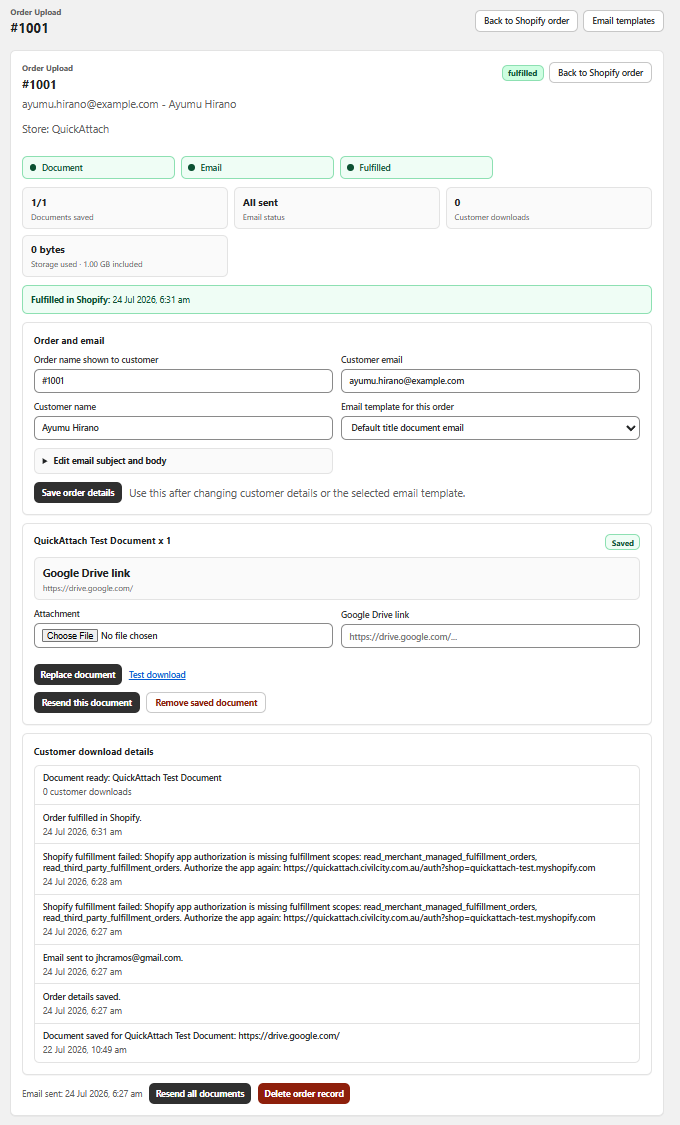
QuickAttach is being built for order-specific delivery: a merchant can attach a different file or link to the relevant Shopify order item, then deliver it through a branded email when fulfillment is ready. That is useful when the deliverable is created after checkout and lives outside the product catalogue.
The key decision is simple: if every buyer receives the same asset, product-level delivery may be enough. If each buyer receives a different file or private destination, use an order-specific process that keeps the deliverable tied to the order.
Deliver the right private destination.
Creating a different file or link for every Shopify order? Install QuickAttach for an order-specific delivery workflow.
Install on Shopify